Backtest options strategies minute by minute — 18 years of real chains.
Backtest 13 options strategies — including the wheel — against real option chains, not a pricing-model simulation. Build the strategy yourself, or chat with the AI to create one — it drafts the form as you go, and you review before anything runs. Then paper-trade the same rules on a schedule. OptionKrafter is an educational and analytical tool. It is not a broker and never places real orders.
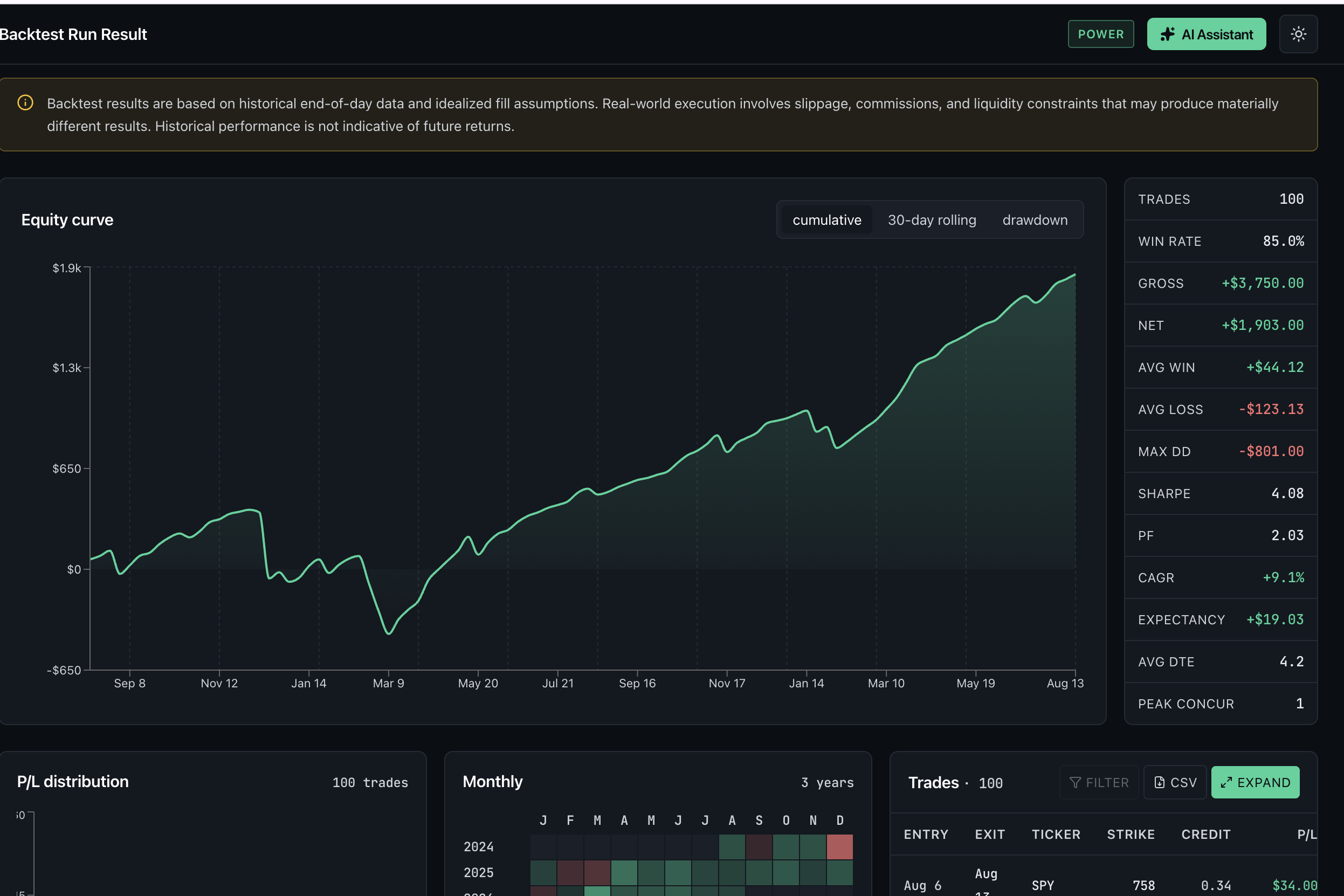
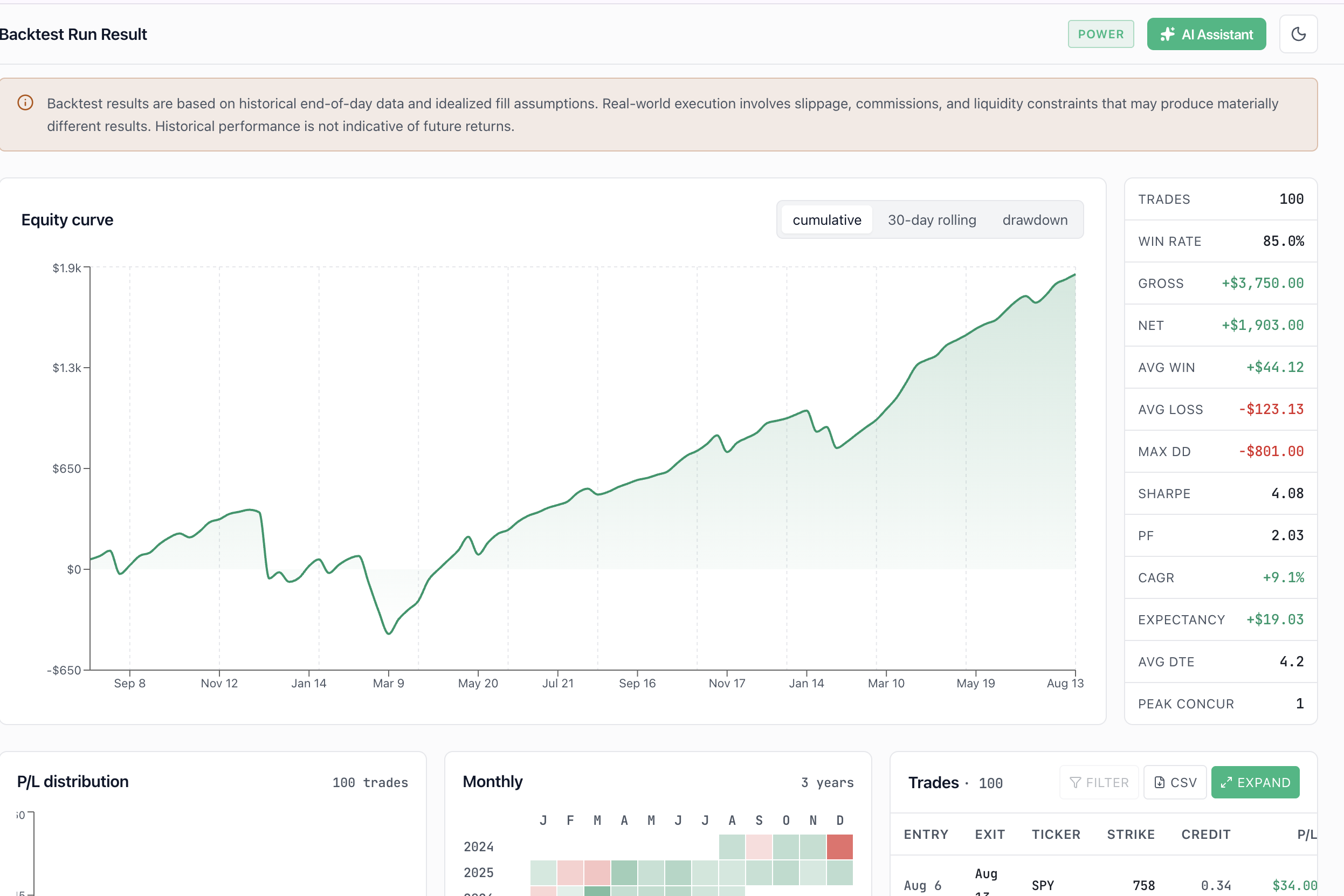
The whole wheel cycle, assignment included
Most backtests stop at the short put. This one keeps going.
The wheel isn’t a trade — it’s a loop. You sell a cash-secured put. If it expires in the money you’re assigned 100 shares. You sell calls against those shares until they’re called away. Then you start again. That loop needs a backtesting engine that models assignment. Most model trades.
- Cash-secured put → assignment into shares → covered calls → called away → repeat
- Cost basis carried through the assignment
- Cost-basis floor so a delta-picked call strike never lands below what you paid
- Rolling, in profit or in loss, as separate rules
- Strike selection by percent OTM or delta target
- On all US tickers
Because most people don’t wheel SPX. They wheel a name they’d be content to own. The same engine runs it forward as a paper-trading bot.
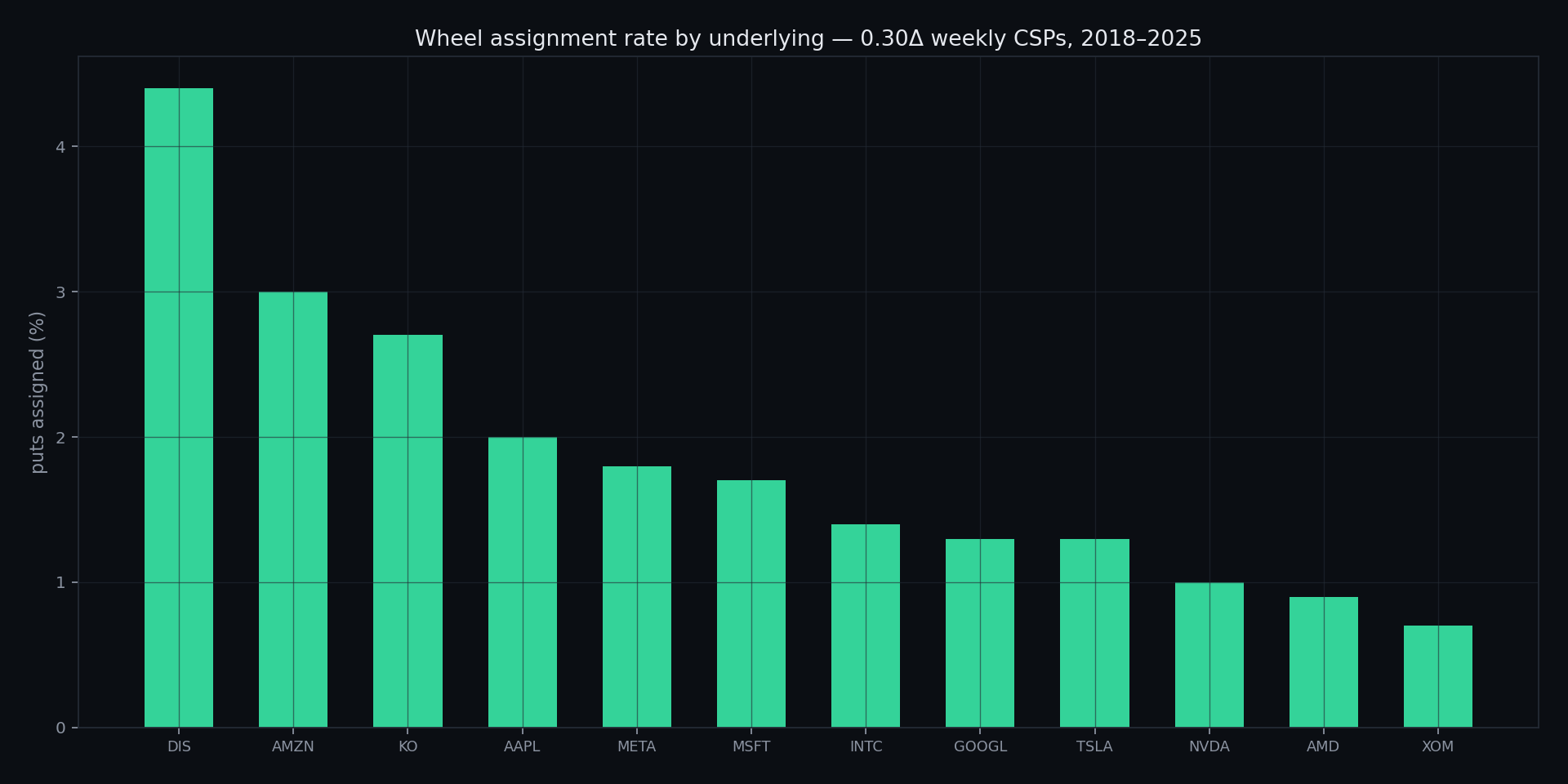
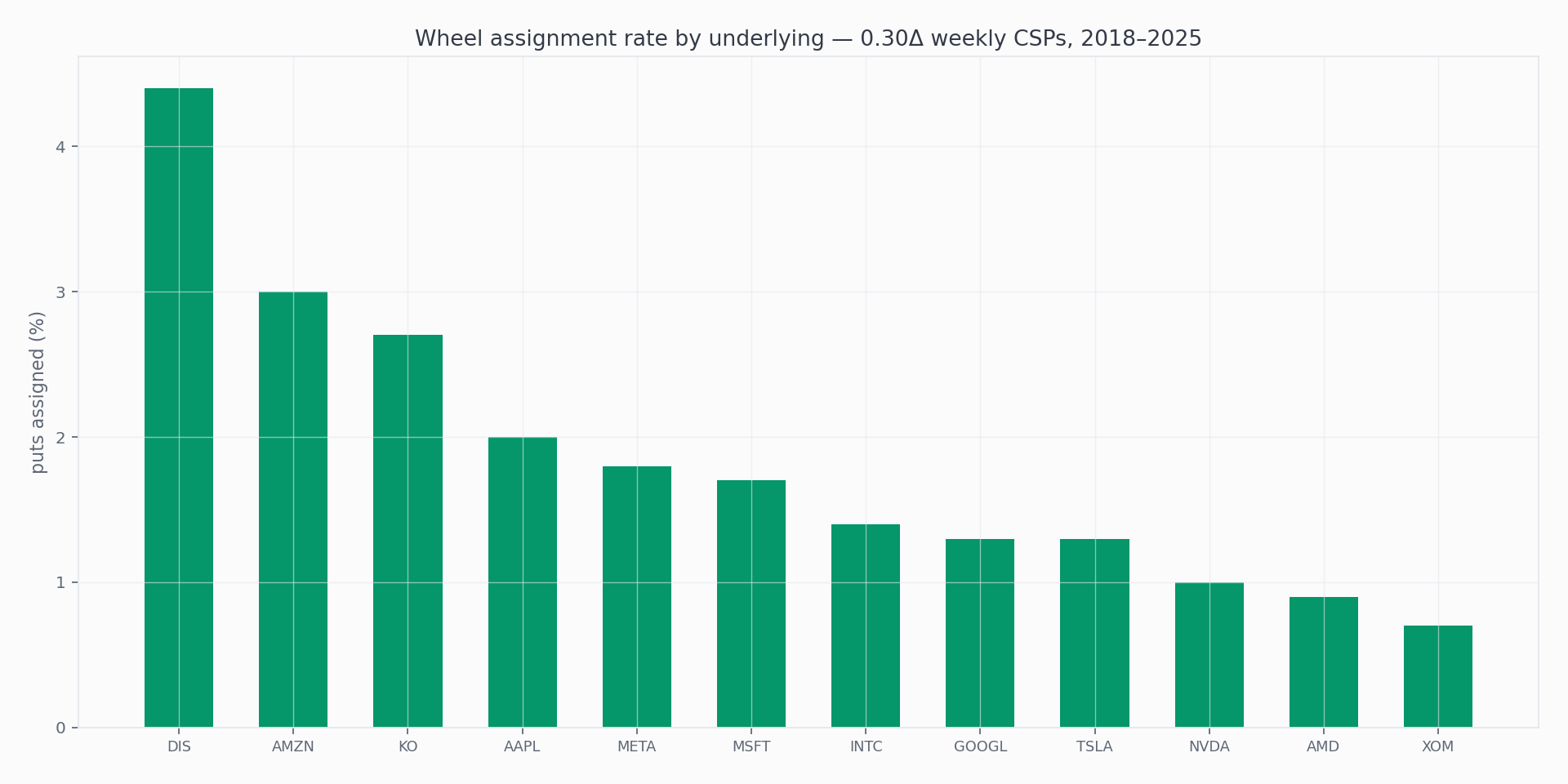
One workflow, from idea to observation
Every part of OptionKrafter answers the same question in a different timeframe: what did these rules actually do?
Minute-by-minute backtests, chosen for you
Windows starting April 2023 or later evaluate minute by minute — automatically, with no setting to choose. Stops, targets and entries trigger on the minute they happen, not the day’s close. Earlier windows run end-of-day: one engine, two data eras, each at the finest resolution the data supports. How fills are modeled →
Minute-by-minute evaluation is on paid plans; the free plan runs end-of-day.
Test the rules, not the story
Wheel, credit and debit spreads, iron condors, iron butterflies, straddles, strangles, long calls and puts. Set strikes by percent, dollar offset or delta; add entry filters, profit targets, stops and rollover rules — then run it over as much history as your plan reaches.
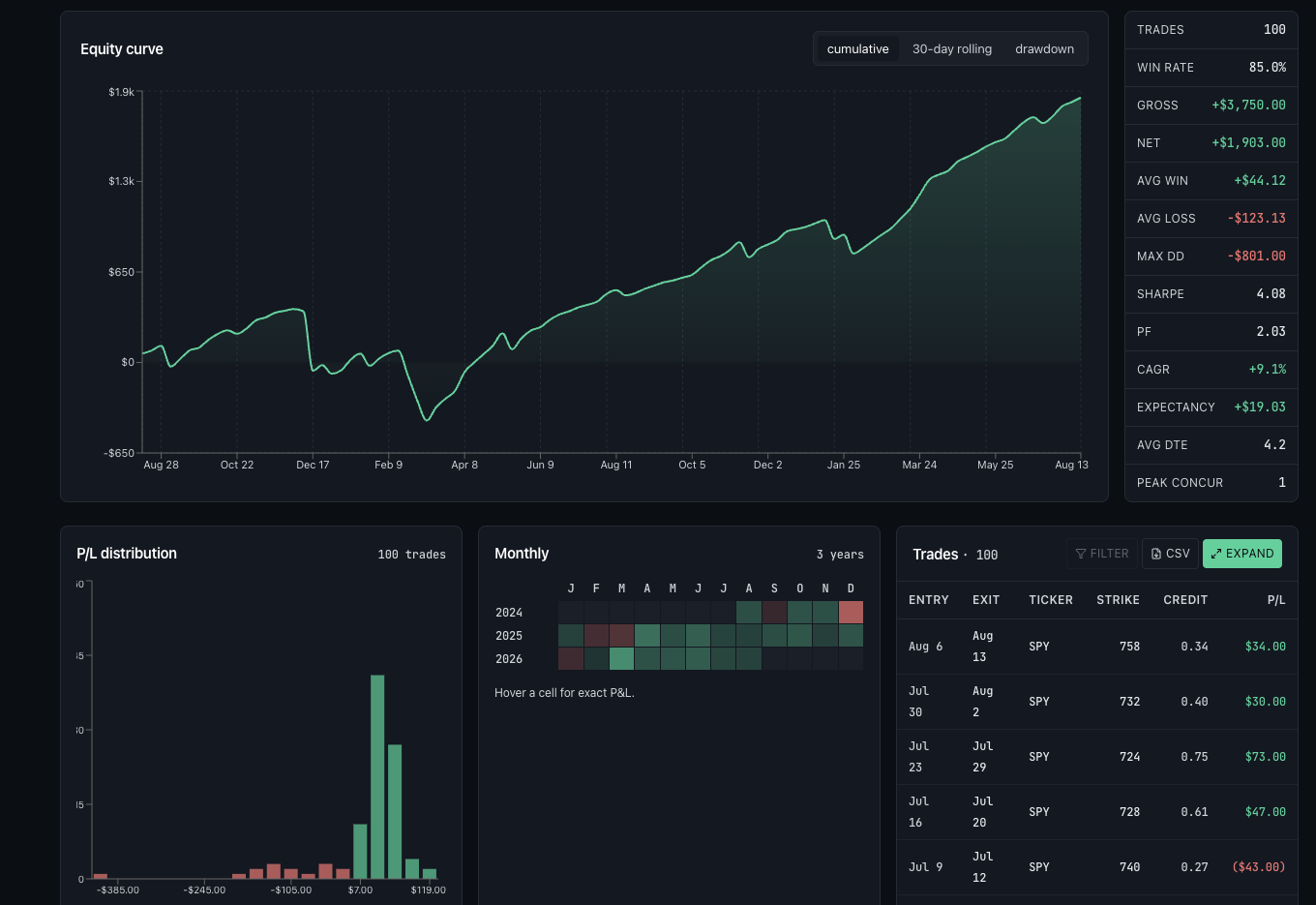
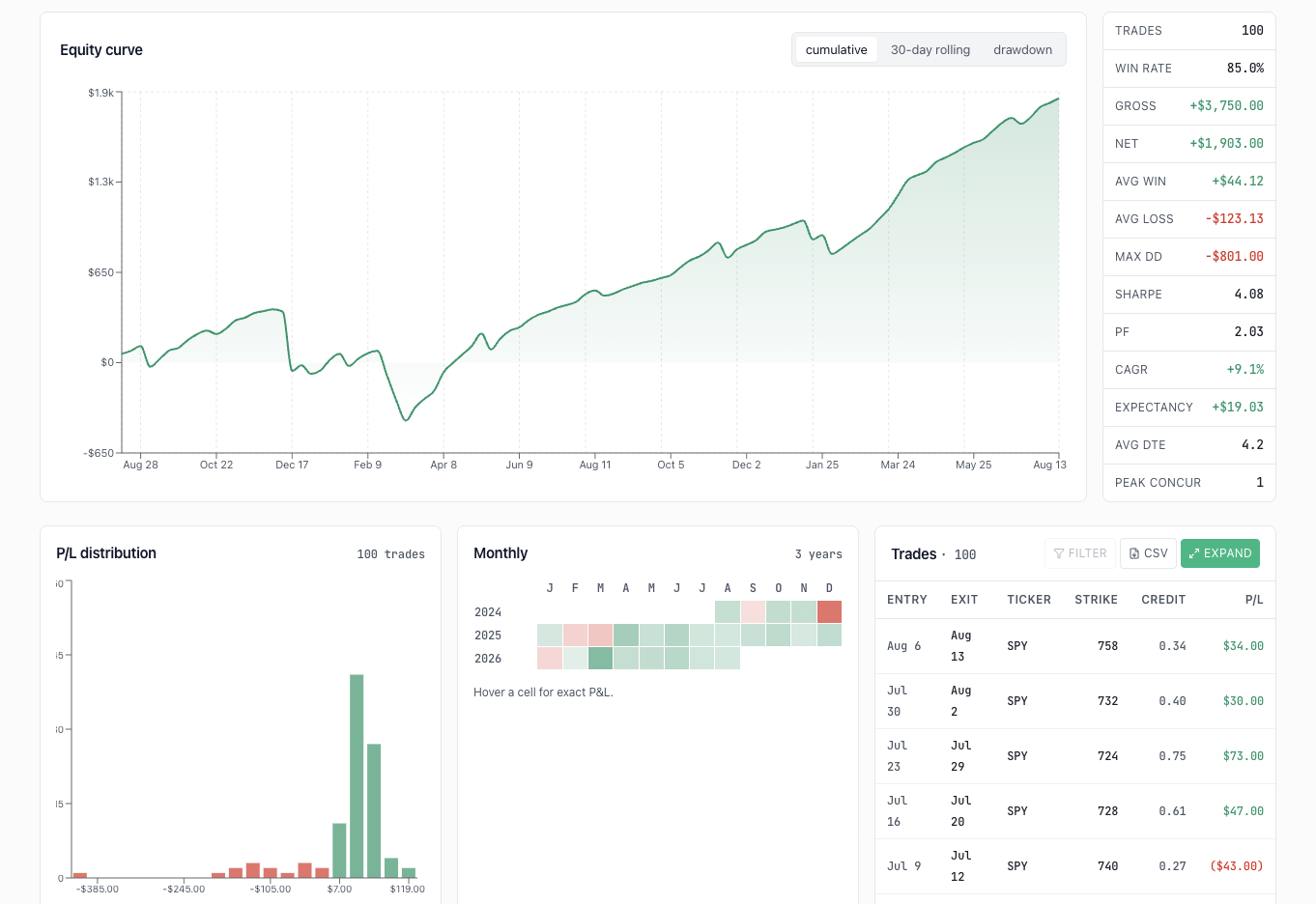
- Trades, win rate, expectancy, max drawdown, CAGR and nine more metrics per run
- Every closed position names the rule that fired
- AI analysis reads your own result and explains what drove it
All US tickers, not a shortlist
Small caps, recent listings, thinly covered ETFs — if it’s US-listed with traded options, you can backtest it. No curated universe, no waiting for a name to be added.
- Option chains reach back to 2008, subject to each name’s own listing history
- A run that reaches past a name’s history says so plainly rather than papering over it
- The screener and watchlist run over the same universe
Paper-trade the same rules on a schedule
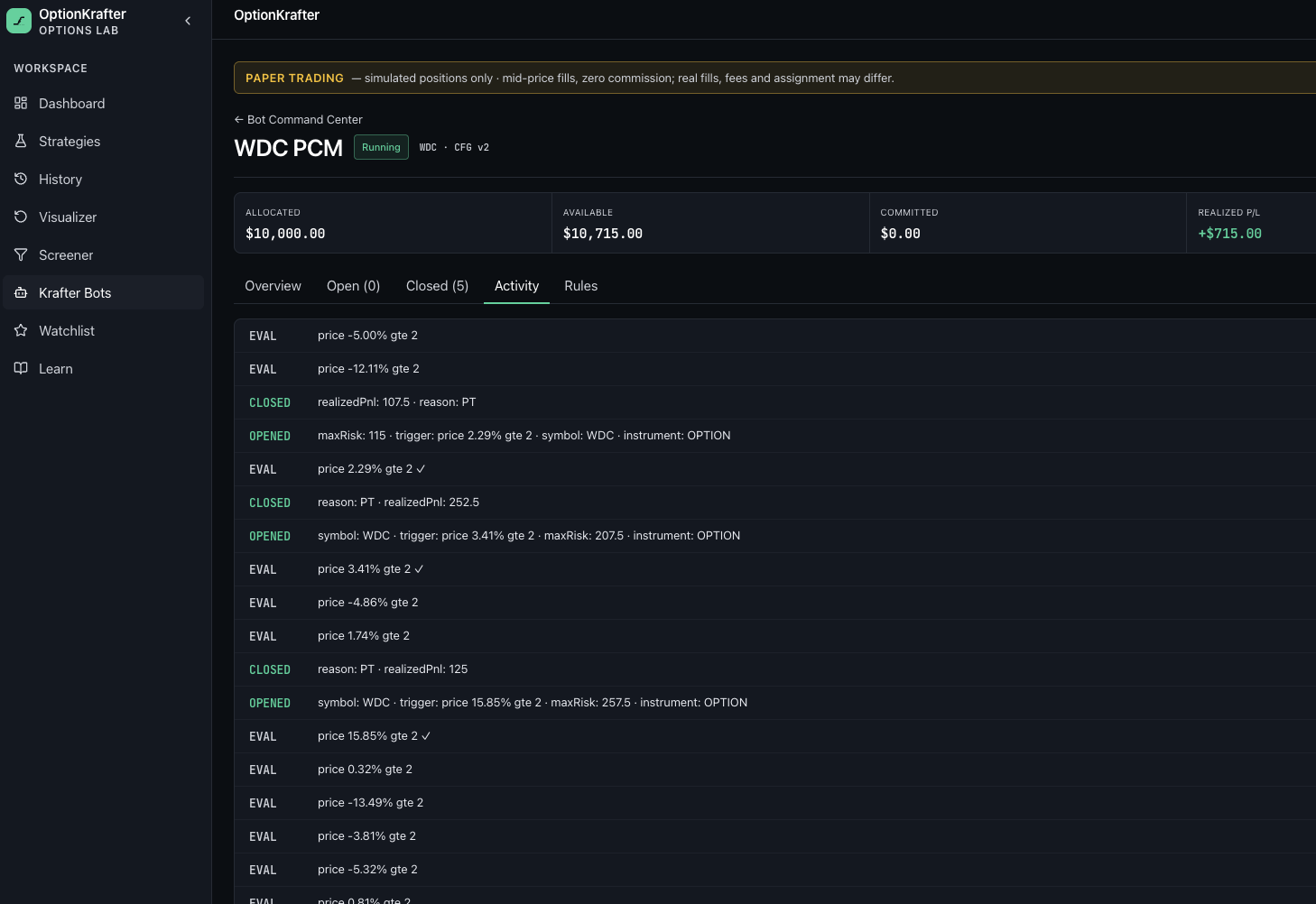
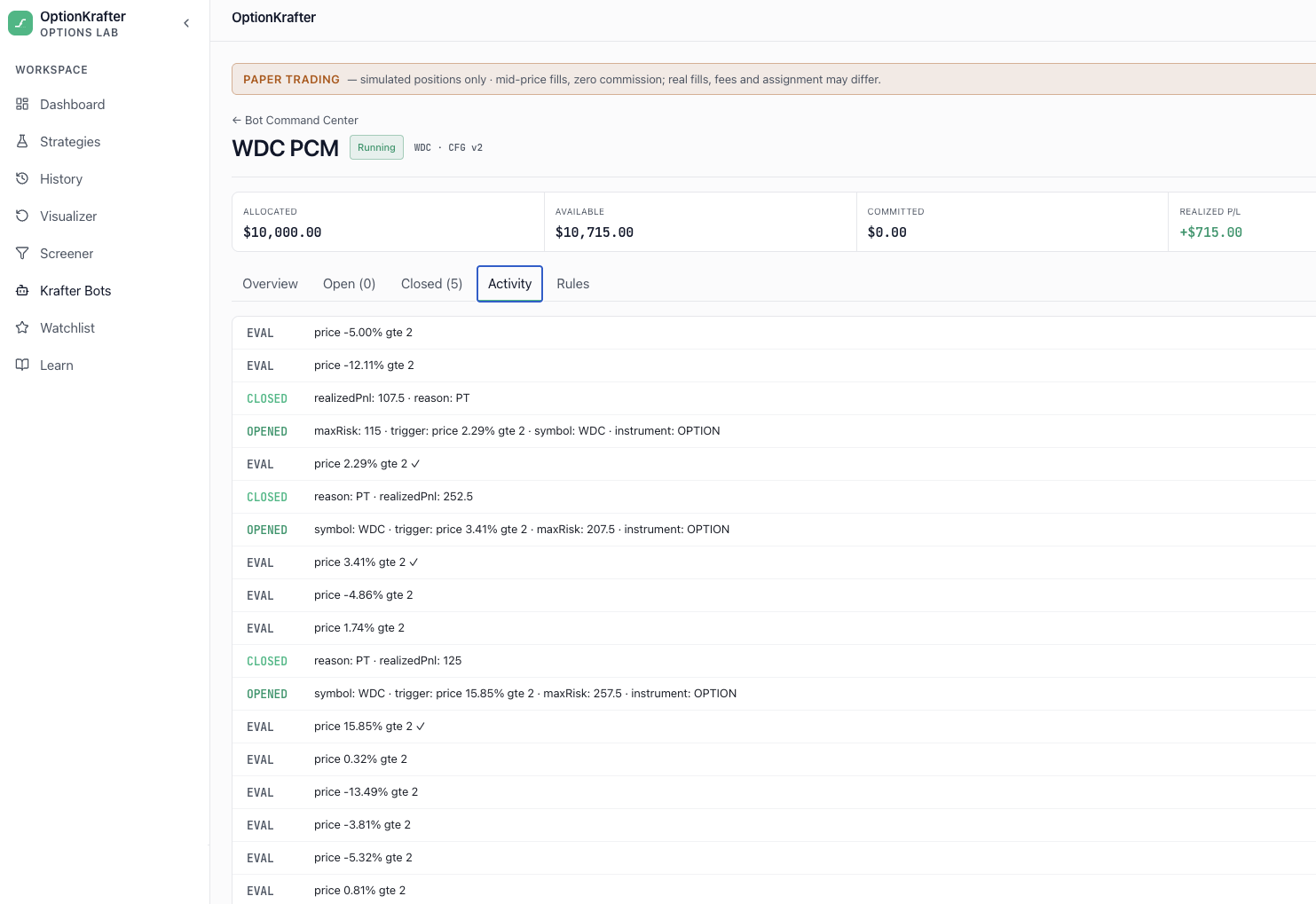
A bot watches your trigger conditions, opens positions with simulated capital, and closes them by your exit rules — logging every evaluation with the values it saw. No broker connection, no real orders, ever.
- Trigger on time or on stock events, with multiple conditions
- Isolated paper capital per bot — it can never spend more
- Activity log shows each check, each fill, each reason
Find candidates, then follow them
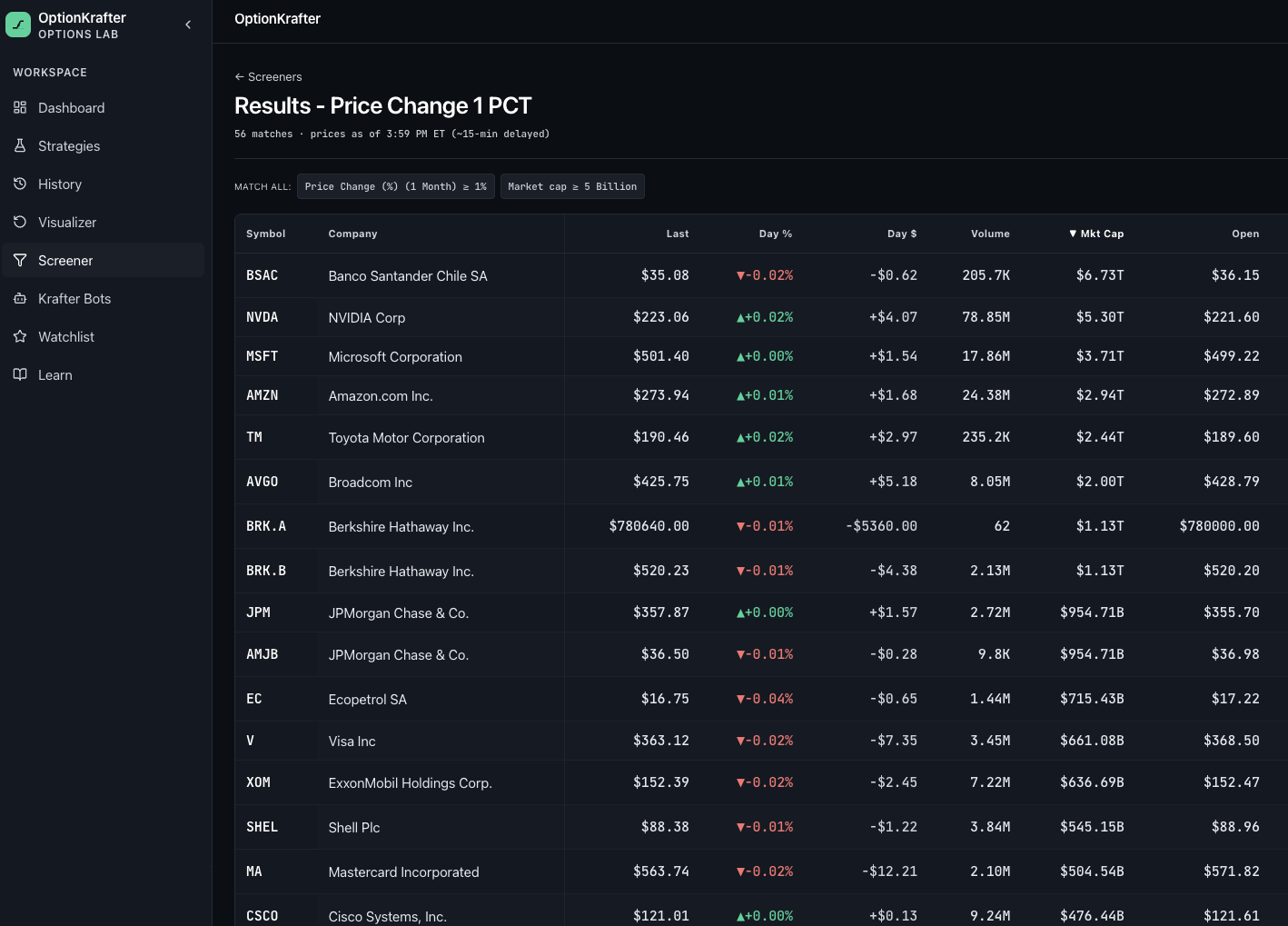
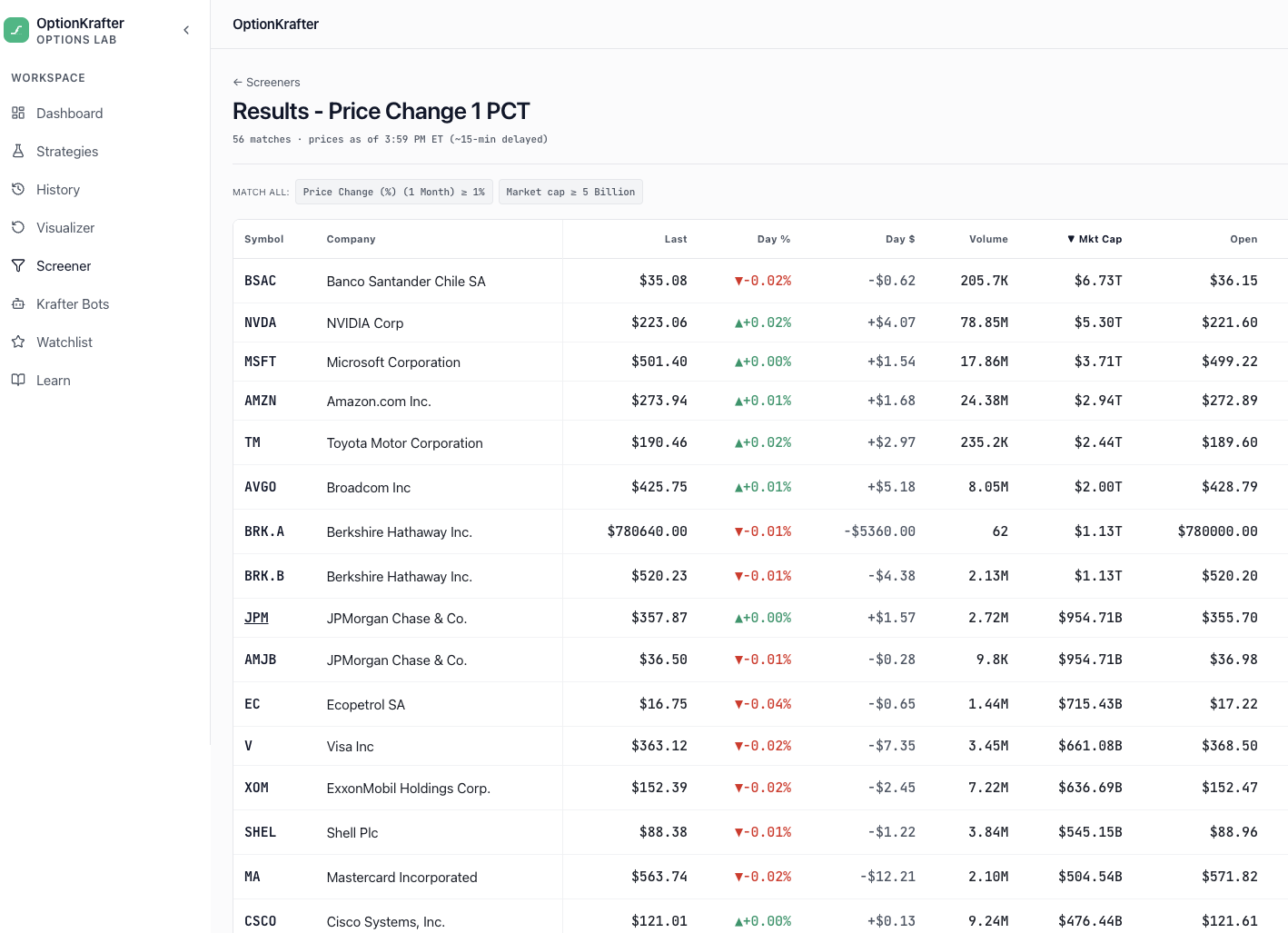
Save screeners over US equities using fundamentals and signals, run them when you want, and add matches to a watchlist that greets you each morning with a brief on what changed overnight.
- Saved screeners you run manually — no surprise refreshes
- Watchlist and screener share one table, same columns
- Morning brief delivered weekday mornings at 7:00 AM ET
Two numbers, both shown
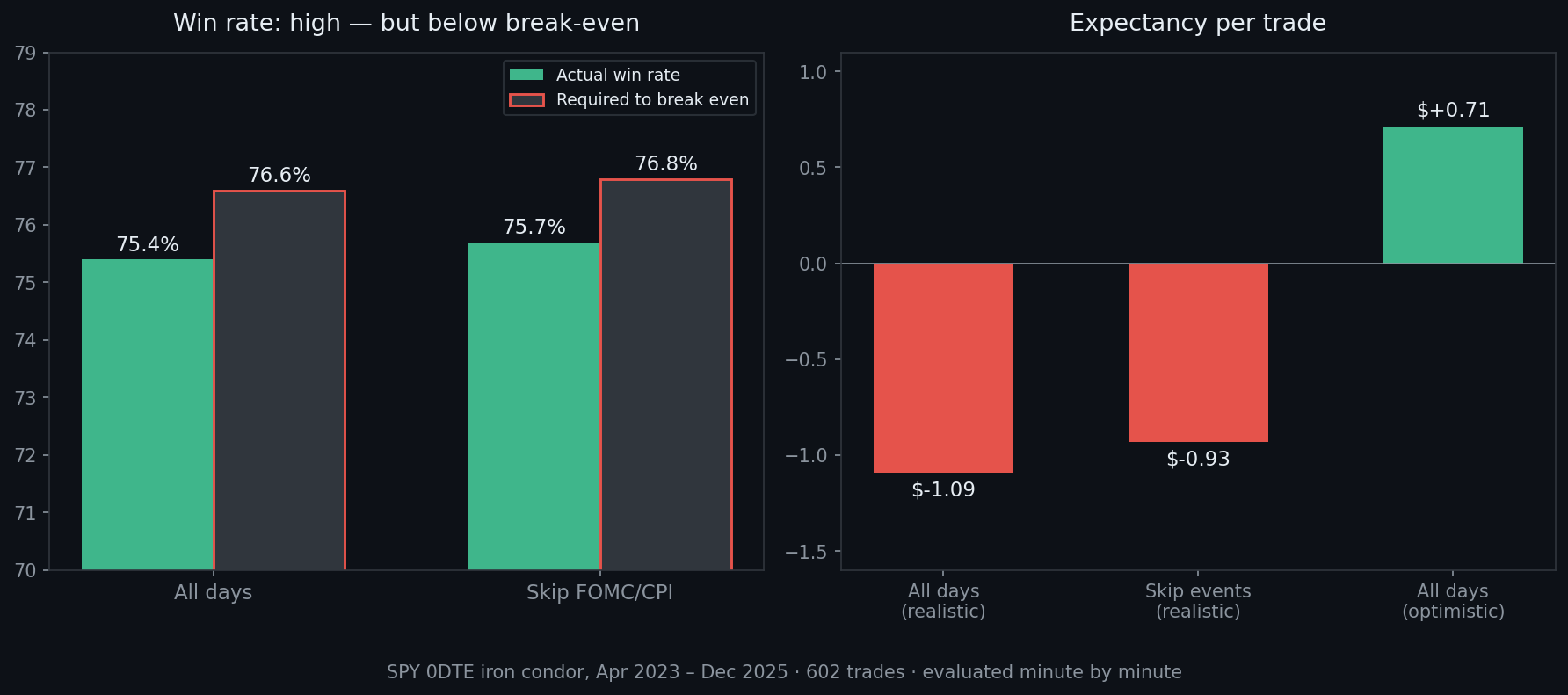
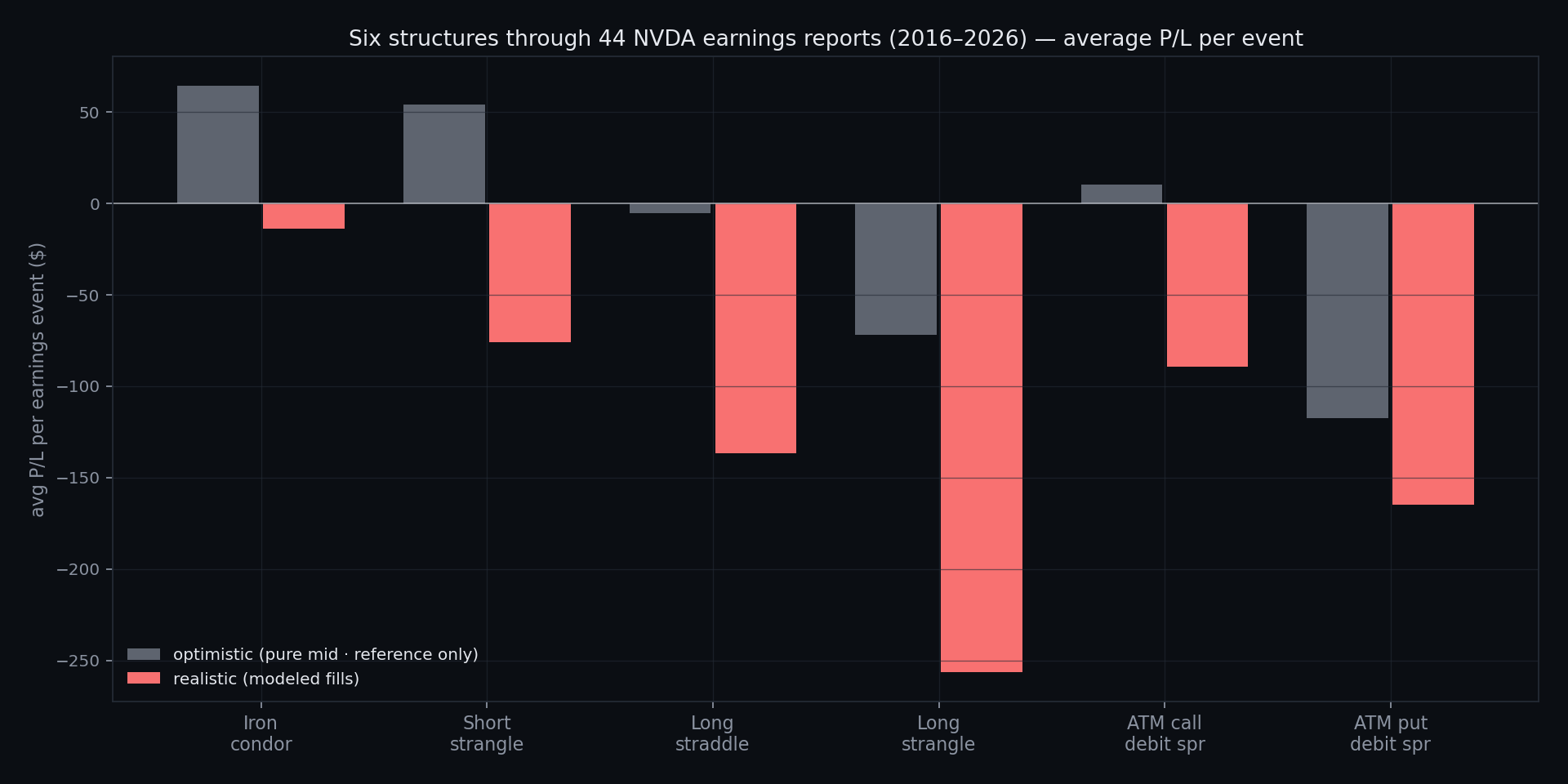
Every backtest reports the realistic result with modeled fills and commissions, and the same trades at pure mid. The assumptions are stamped on the run — read what the spread really costs.
Sketch a trade before you test it
Pick a strategy, add legs, and see the payoff curve at expiration and today — drag through prices and dates to watch it move.
Plain-English explainers
Every strategy type has a written explainer covering how it works, what it costs, and how it fails — linked from the form where you build it.
One AI, across the whole workflow
Plain English goes in; strategies, explanations and summaries come out — all of it about your own data. It never picks trades, predicts markets, or acts on your account.
Describe a strategy, get a strategy
“sell 2% OTM puts on NVDA weekly” becomes a parsed, editable strategy you review before saving. The sentence and the form produce the same object.
Describe a screen the same way
The same parser builds screener rules over US equities — write the filter in a sentence, then adjust the fields it produced.
AI analysis on your own runs
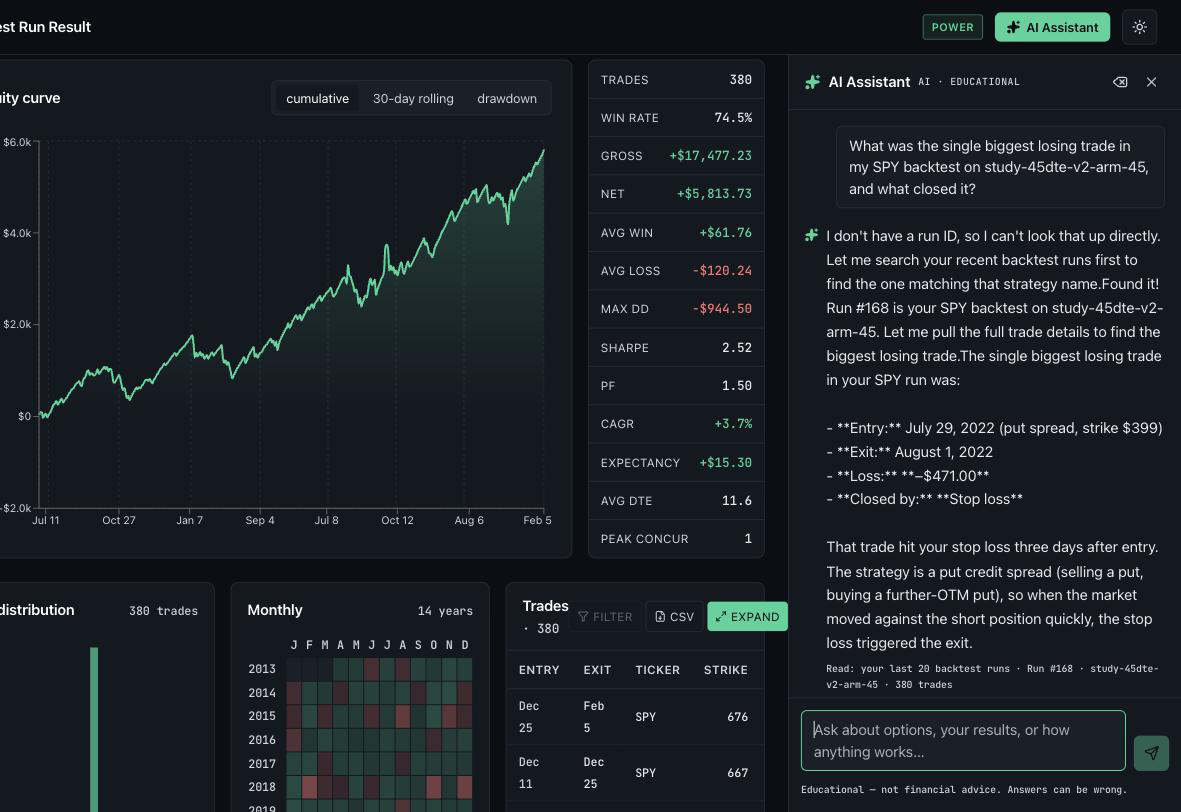
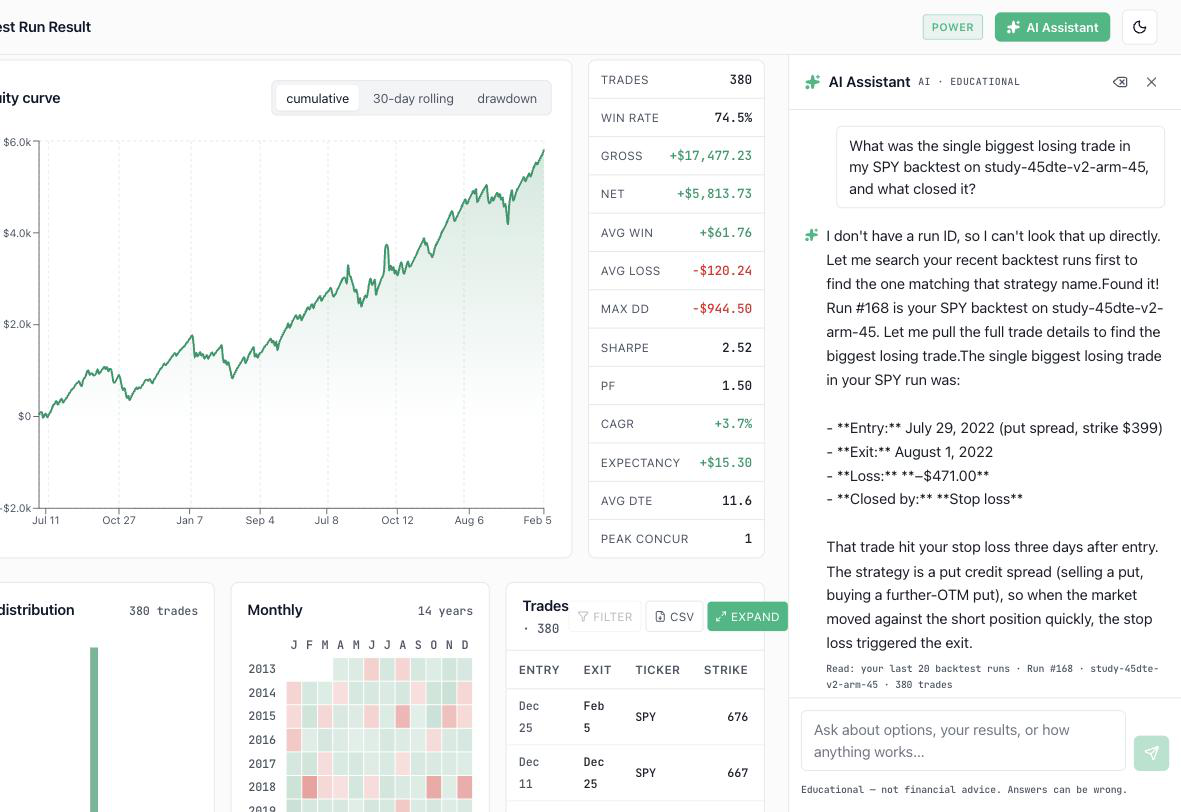
Reads the result you just ran — trades, drawdowns, the rules that fired — and explains what drove it, in past tense, with the numbers cited.
An assistant that reads your data
Ask why a run lost money or which bot is holding a position. It explains runs, bots and concepts, and can draft a strategy for you to review — it never advises.
Morning briefs, written for your watchlist
A short written summary of what changed overnight on the names you follow — delivered weekday mornings at 7:00 AM ET.
Read-only over your own data · drafts are never saved until you review them · observations, not advice.
Or run OptionKrafter from the assistant you already use
Connect it to Claude, Cursor, Grok or any MCP client. Backtests run on your account with your plan, on the same engine as the website, and the assistant reads the realistic result — with the pure-mid reference — back to you in chat.
- It can: read your strategies and past runs, start a backtest when you allow it, and read that result.
- It can never: place a real trade, see a payment method, change your plan, or delete anything.
- You stay in control: sign-in happens on optionkrafter.com, and you can revoke access at any time in the Agent Hub.
How connecting an app works → https://mcp.optionkrafter.com/mcp
One loop, from candidate to paper trade
Screening, testing and paper trading are the same loop at different speeds — each step feeds the next, and you can enter it anywhere.
Find something to look at
Run a saved screener over US equities — written in plain English or built field by field — or start from your watchlist and its AI morning brief.
Describe a strategy
Type it in plain English — "sell 2% OTM puts on NVDA weekly" — and the parser fills the form for you to check. Or fill it yourself; both produce the same saved strategy.
Run the backtest — minute by minute
Trades, P/L, win rate, drawdown and a monthly heatmap, with every skipped entry day accounted for and fills priced by a disclosed execution model — realistic and pure-mid numbers both shown — then let AI analysis read the run and explain what drove it.
Hand it to a bot
When the rules hold up, a Krafter Bot paper-trades them forward on your schedule and logs every evaluation — and the assistant can explain any of it.
Options backtesting on real chains
Most “backtests” price options with a model. This one replays listed prices — end-of-day option chains back to January 2008 and minute-by-minute trade prints from April 2023. Fills use a disclosed per-leg slippage model, and every result shows a realistic and an optimistic figure from the same trades. Every run is stamped INTRADAY or END-OF-DAY. The assumptions are on the result, and the full write-up is on How we run a backtest.
Backtest options strategies against 18 years of real chains, then read the equity curve, win rate, drawdown, and per-trade table. The full page: options backtesting on real historical chains.
Start free. Upgrade as your research grows.
Choose the plan that matches your research needs—from exploring your first strategy to running hundreds of backtests and paper bots.
Free
- 5 backtests per month
- 1 year of backtest history
- All US tickers
- 1 saved screener
- Describe strategies & screeners in plain English
- Bot drafts only — starting needs Starter
- AI Assistant
No credit card, ever
Starter
Recommended- Everything in Free, plus:
- 25 backtests per month
- 3 years of backtest history
- All US tickers
- 5 saved screeners
- 1 active Krafter Bot
- AI Assistant included
Pro
- Everything in Starter, plus:
- 100 backtests per month
- 7 years of backtest history
- 15 saved screeners
- 5 active Krafter Bots
- AI Assistant included
Power
- Everything in Pro, plus:
- 500 backtests per month
- Full history — since 2008
- 100 saved screeners
- 20 active Krafter Bots
- AI Assistant included
Studies from our own data
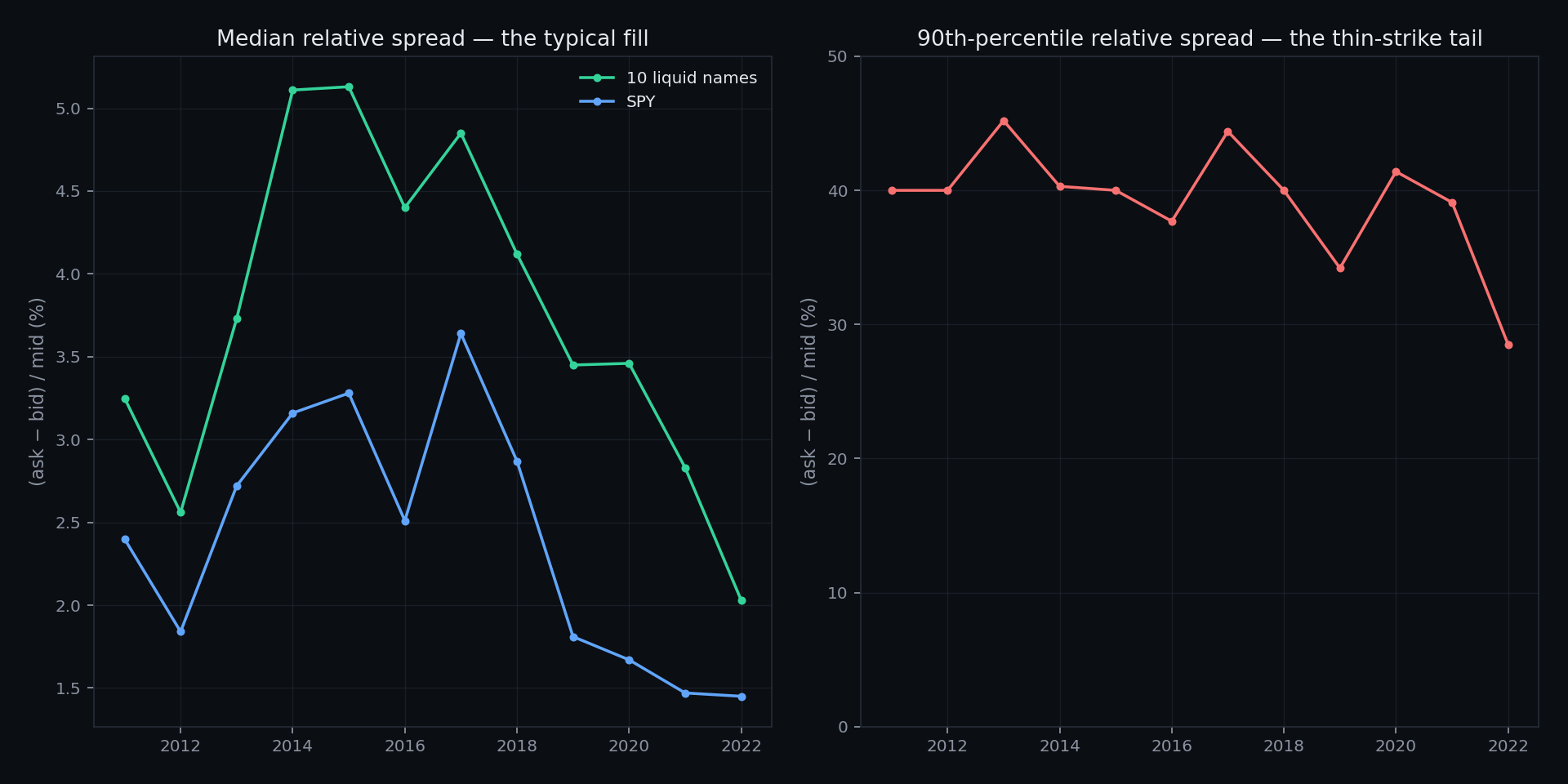
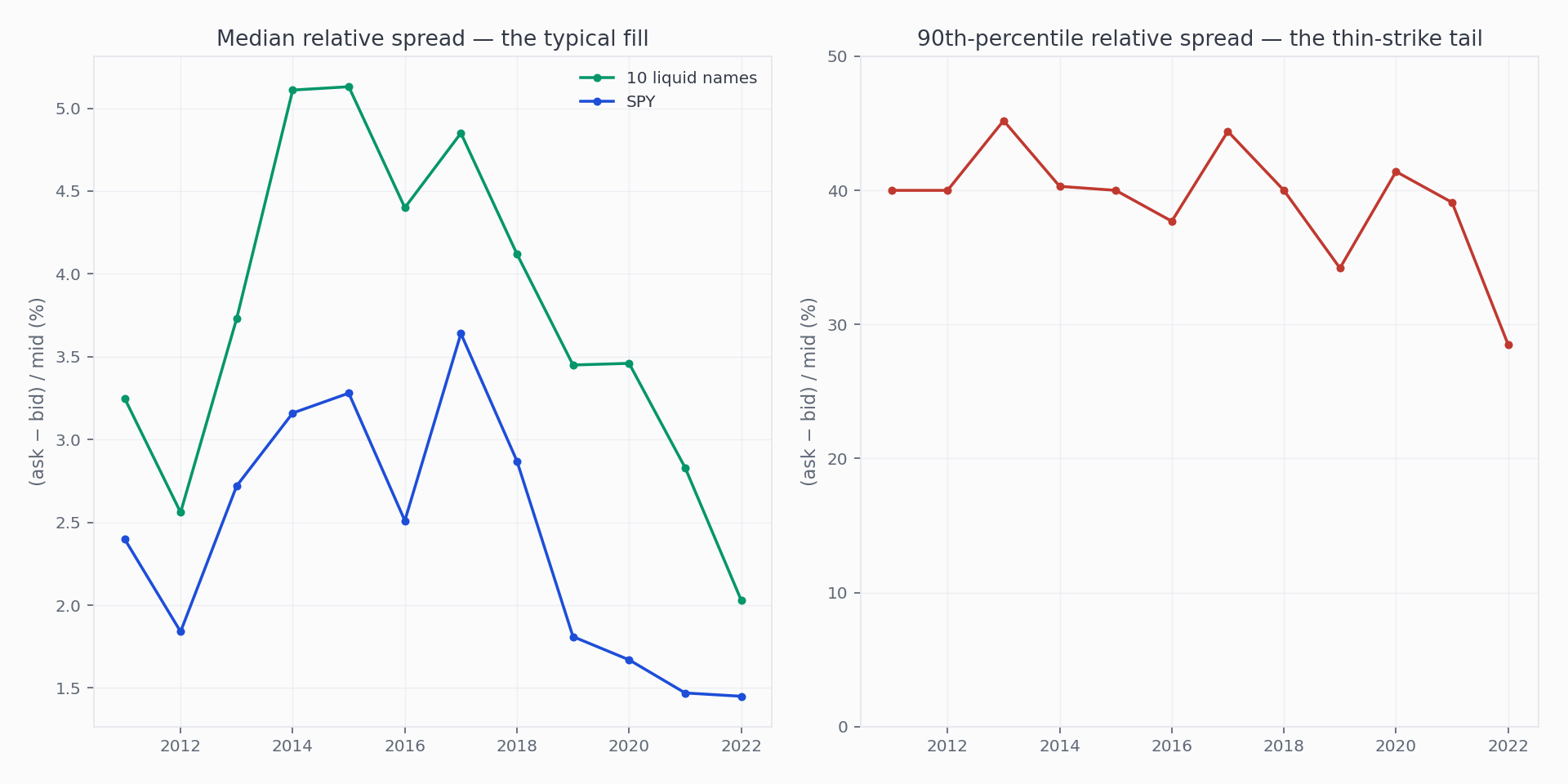
Built by one team, for people who want the numbers
OptionKrafter started as a spreadsheet — a stubborn attempt to answer whether the rules of thumb passed around options forums survive contact with historical data. Most of them survive partially, in some regimes, with caveats nobody mentions. That gap is the product.
We are an independent software company, not a broker, adviser, or signal service. We don't sell trade ideas, we don't publish picks, and no part of the product places an order. It computes, simulates, and shows its work — what you do with that is yours.
Is this financial advice?
No. OptionKrafter is an educational and analytical tool. It doesn't recommend trades, predict markets, or manage money. Everything it shows is either historical data or a simulation you configured.
Do the bots trade real money?
No. Krafter Bots trade simulated (paper) capital only, isolated per bot. There's no brokerage integration, so nothing a bot does can reach a real account.
Which tickers can I backtest?
All US tickers. If it trades options on a US exchange you can backtest it — small caps, recent listings, thinly covered ETFs included.
Are backtests minute-by-minute?
Yes, where the data supports it: windows starting April 2023 or later evaluate minute by minute on paid plans — automatically, with no setting to choose. Windows reaching earlier run end-of-day, and the wheel evaluates end-of-day in v1. Minute-by-minute since April 2023 · end-of-day back to 2008.
Can you backtest the wheel properly?
Yes — the whole cycle, not just the short put. Assignment happens on the contract’s own terms, shares are held with a cost basis, covered calls are written and called away, and every cycle is recorded as its own trade with the rule that closed it. Rollovers and separate put/call stops included.
How far back does the data go?
Historical option chains begin January 1, 2008. How far back your backtests can start depends on your plan — 1 year on Free up to full history on Power. Coverage is thinner between 2010 and 2013, and we flag runs whose window overlaps that period.
Can I trust the numbers?
Every run states its assumptions on the run page, lists the entry days it skipped and why, and links the methodology behind it. Each published study carries its exact parameters, so you can rebuild the same strategy and check the result yourself.
Can I cancel anytime?
Yes. Billing runs through Stripe and you can cancel or change plans from the billing page. Your saved strategies and past runs stay with your account.
Run your first backtest in a few minutes
Describe a strategy, pick a window, and see what the rules did. The free plan needs no card and no broker.